Feb 13th 2025
How to Replace an RV Water Heater Heating Element | Step-by-Step
How to Replace an RV Water Heater AC Heating Element
If your RV water heater works on propane but will not heat on electric, a failed AC heating element is one of the first components worth checking.
Fortunately, replacing an RV water heater heating element is a fairly straightforward repair on many Suburban, Dometic, and Atwood tank-style water heaters. The most important steps are identifying the correct replacement element, completely disconnecting 120V power, draining the tank, and never energizing the new element until the tank is completely full of water.
This guide explains how to diagnose and replace an RV water heater AC heating element.
What Does the RV Water Heater Heating Element Do?
Gas/electric RV water heaters normally have two separate ways to heat the water:
-
An LP propane burner
-
A 120V AC electric heating element
When connected to shore power or a generator, the electric element heats the water without requiring propane.
If your water heater heats normally on propane but stays cold when switched to electric mode, the heating element may have failed.
You can browse replacement components by model in our RV Water Heater Parts section.
Common Signs of a Bad RV Water Heater Element
A failed electric heating element may cause:
-
Water heater works on propane but not electric
-
No hot water when electric mode is selected
-
Electric heating becomes unusually slow
-
RV water heater circuit breaker trips
-
Element fails a continuity test
-
Element shows continuity between a terminal and its metal body
-
Burned or damaged electrical terminals
-
Water leaking around the heating element
-
Element failed after the water heater was accidentally switched on while empty
That last one is especially common.
Never Turn an RV Water Heater Element On Without Water
An RV water heater heating element must remain submerged in water while operating.
If the electric mode is switched on while the tank is empty, the element can overheat and fail extremely quickly. This is commonly called dry firing the element.
Before turning the water heater back on after winterizing, draining, servicing, or replacing the element, always make sure the tank has been completely refilled.
Before Replacing the Element, Make Sure It Is Actually Bad
A water heater that does not operate on electricity does not automatically have a bad heating element.
Other possible causes include:
-
Tripped RV circuit breaker
-
Failed exterior or interior electric switch
-
Bad thermostat or high-limit switch
-
Failed relay
-
Loose or burned wiring
-
Loss of 120V power to the water heater
For example, many electric-equipped Suburban SW-series water heaters use the Suburban 525002 120V Thermostat & Hi-Limit Switch as part of the AC heating circuit.
Older Atwood/Dometic applications may use components such as the Dometic/Atwood 91873 110/120V Thermostat & ECO.
If 120V power is reaching the element but the element does not heat, testing the element itself is the next step.
How to Test an RV Water Heater Heating Element
Disconnect shore power and turn off the generator before testing the element.
Do not rely solely on turning the water heater switch off. You will be working with a 120V AC circuit.
Remove the element access cover and disconnect the wires from the element terminals.
Set a multimeter to resistance or continuity.
Test Between the Two Terminals
Place one meter probe on each element terminal.
A functional element should show resistance through the heating coil. An open circuit or infinite resistance generally indicates that the internal heating coil has failed.
Test the Element for a Short to Ground
Place one probe on either electrical terminal and the other against the metal body of the element.
There should normally be no continuity between the terminal and the element body.
Continuity to the metal body can indicate a shorted element and the element should be replaced.
Find the Correct RV Water Heater Heating Element
Do not order an element based only on the size of the water heater.
Start by locating the manufacturer, complete model number, and preferably the serial number from the data label behind the exterior water heater door.
Use our RV Water Heater Part Finder to locate replacement parts for your exact water heater.
Suburban RV Water Heater Elements
Many gas/electric Suburban SW-series water heaters use the Suburban 520900 120V / 1,440-watt heating element.
You can browse compatible models and other replacement components on our Suburban RV Water Heater Parts page.
Suburban electric elements also use a sealing gasket between the heating element and tank. If the gasket is damaged, compressed, or leaking, replace it with the Suburban 070805 Electric Element Gasket.
Dometic and Atwood RV Water Heater Elements
Many current Dometic gas/electric water heaters and several older Atwood models use the Dometic/Atwood 92097 1400-Watt AC Heating Element.
Applications include several popular models such as:
-
Dometic WH-6GEA
-
Dometic WH-9GEA XT
-
Dometic WH-10GEA
-
Dometic WH-16GEA XT
-
Atwood GC6AA-10E
-
Atwood GCH6A-10E
-
Atwood GC10A-4E
-
Atwood GCH10A-4E
Always confirm your complete water heater model before ordering.
Tools You May Need
For most RV water heater element replacements, you will need:
-
Multimeter
-
Screwdriver
-
Ratchet
-
Correct heating element socket or large socket
-
Towels or drain pan
-
Replacement heating element
-
New heating element gasket if not included
A dedicated water heater element socket can make removal much easier, particularly when the old element has been installed for several years.
How to Replace an RV Water Heater Heating Element
1. Disconnect All 120V AC Power
Unplug the RV from shore power and turn off the generator.
Turn the water heater breaker off as an additional precaution.
Verify that no AC voltage is present at the water heater before touching the element terminals.
2. Turn Off the Water Heater and Let It Cool
Turn off both propane and electric water heating.
If the water has recently been heated, allow it to cool before draining the tank.
Hot water inside the tank can cause serious burns.
3. Turn Off the Water Supply
Turn off the RV water pump and disconnect or turn off the campground water supply.
Open a hot-water faucet inside the RV to relieve pressure.
4. Drain the Water Heater Tank
Drain the water heater completely.
On a Suburban tank-style water heater, this generally involves removing the anode rod/drain plug.
Suburban uses a porcelain-lined steel tank that relies on a sacrificial anode rod for corrosion protection, so this is also a good opportunity to inspect the anode.
If you are already servicing your Suburban water heater, check the condition of the anode and browse our Suburban RV Water Heater Parts if it needs replacement.
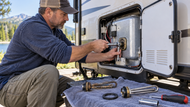
5. Remove the Heating Element Access Cover
Locate the heating element.
Depending on the manufacturer and model, access may be from the exterior compartment or rear of the water heater.
Remove the protective cover surrounding the 120V element connections.
6. Photograph and Disconnect the Wiring
Take a photo of the wiring before removing anything.
Disconnect the wires from the element terminals.
Inspect the terminals and wiring for:
-
Burned connectors
-
Loose terminals
-
Melted insulation
-
Corrosion
-
Heat damage
Damaged wiring should be repaired before installing the new element.
7. Remove the Old Heating Element
Use the appropriate element socket and ratchet to loosen the heating element.
Turn it counterclockwise and carefully remove it from the tank.
Some older elements can be difficult to remove because of mineral buildup or corrosion.
8. Clean the Sealing Surface
Remove any sediment, mineral deposits, or remains of the old gasket from the opening.
The sealing surface should be clean and smooth before installing the new element.
9. Install the New Heating Element
Install the new gasket and heating element.
Thread the element carefully into the tank to avoid cross-threading it.
Tighten it securely enough to compress the gasket and create a watertight seal, but do not excessively overtighten the element.
10. Reconnect the Wiring
Reconnect the electrical wires exactly as they were installed previously.
Make sure all terminals are secure.
Reinstall the protective element cover.
Refill the Tank BEFORE Turning the Electricity Back On
This is the most important step of the entire repair.
Do not turn the electric water heater on yet.
Close the drain or reinstall the anode rod as required.
Turn the water supply back on and open a hot-water faucet inside the RV.
Initially, you will normally hear air escaping from the faucet.
Let the faucet run until you get a steady stream of water with no significant bursts of air.
This confirms that the water heater tank has filled.
Check the new heating element for leaks.
Only after the tank is completely full should you restore 120V power and switch the electric water heater back on.
What If the New Element Still Does Not Heat?
If you have replaced the element and the water heater still does not operate electrically, check the rest of the AC heating circuit.
Depending on the water heater, possible problems include:
-
120V thermostat
-
ECO/high-limit switch
-
Electric element switch
-
Relay
-
Circuit breaker
-
Wiring
-
Control board
-
Incoming 120V power
For Suburban models, the Suburban 525002 120V Thermostat & Hi-Limit Switch is another common component in the electric heating circuit.
For older Dometic/Atwood units, the Dometic/Atwood 91873 AC Thermostat & ECO may be part of the system.
If you aren't sure which component your water heater uses, start with the model number and browse our complete selection of RV Water Heater Parts.
Frequently Asked Questions
Why does my RV water heater work on propane but not electric?
A failed AC heating element is one possible cause. Other possibilities include a tripped breaker, failed thermostat, bad switch, defective relay, damaged wiring, or loss of 120V power.
Can an RV water heater element burn out?
Yes. Heating elements can fail from age, mineral buildup, electrical faults, or being operated without water in the tank.
What happens if I turn my RV water heater on with an empty tank?
The electric heating element can overheat and fail very quickly. Always completely fill the water heater before switching electric mode on.
Are all RV water heater heating elements the same?
No. Element wattage, physical design, mounting, controls, and model compatibility can vary. Always identify your water heater manufacturer and complete model number before ordering.
Do Suburban and Atwood water heaters use the same heating element?
Generally, no. Suburban and Dometic/Atwood water heaters use manufacturer- and model-specific components. Verify the complete model before purchasing a replacement.
Do I need to drain the RV water heater to replace the heating element?
Yes. The tank should be depressurized and completely drained before removing a screw-in heating element.
Find the Correct RV Water Heater Element
Replacing an RV water heater heating element is a manageable DIY repair for many RV owners, but getting the correct part is just as important as installing it correctly.
At RVWaterHeaterParts.com, you can shop RV water heater parts by manufacturer and model for Suburban, Dometic, Atwood, and Girard systems.
Start with your water heater's complete model number, select the correct replacement element, and remember the golden rule:
Fill the tank completely before turning the electric element back on.