Oct 24th 2026
RV Water Heater Pressure Relief Valve Dripping: Normal or Bad?
TROUBLESHOOTING · RELIEF VALVE
RV Water Heater Pressure Relief Valve Dripping: Normal or Bad?
A relief valve that drips while the heater runs is usually normal. Here’s why, how to stop it, and when the valve really is bad.
The short version
- Suburban: dripping “is normal and does not indicate a defective relief valve.” Dometic says the same.
- Cause: heated water expands, and the RV’s water system is closed. The air pocket at the top of the tank cushions it, but water absorbs that air over time.
- Fix: restore the air pocket (steps below). If it keeps happening, add an accumulator/expansion tank.
- Valves are rated 150 psi / 210°F. Never plug the valve or put a valve between it and the tank.
Restore the air pocket
STEP 1
Turn the heater off
Turn off gas and electric and let the water cool.
STEP 2
Shut off the water
Turn off the pump or city water connection.
STEP 3
Open a faucet
Open the nearest hot faucet.
STEP 4
Pull the relief valve handle
Pull it straight out until water stops flowing, then let it snap shut. That lets air back into the top of the tank.
STEP 5
Close up and refill
Close the faucet, turn the water back on and turn the heater on. Repeat as needed (Suburban says it may need doing periodically).
Still dripping a lot?
Add expansion room
Suburban recommends an accumulator or expansion tank in the cold line between the heater and the check valve, and recommends against a check valve right at the tank inlet. Dometic suggests a diaphragm expansion tank or a separate 100–125 psi relief valve on the cold inlet.
Suspect the valve
A steady stream, or dripping with the heater off and the water cold, points to a bad seat or debris. Dometic says the valve isn’t serviceable: replace it.
Reading it right
Valve makers like Watts treat any discharge as a sign something’s wrong. RV heater makers attribute dripping during heating to thermal expansion. Both can be true: a drip during heating that stops after you restore the air pocket is expansion; continuous flow, or flow with the heater off, is the valve or a real over-pressure problem.
Testing and replacing
- Test yearly: Dometic says to operate the relief valve at least once a year. Expect a little drip afterward as the seat settles.
- Match the valve: Suburban tanks use a 3/4 in. NPT P&T valve; Atwood uses 1/2 in. (91604) or 3/4 in. (90028) depending on the model. Tankless units have their own (IW60: 161250, 145 psi).
- Safety: never plug, cap or remove the valve, and don’t install anything between it and the tank. Shut off and cool the heater before replacing it.
Parts for this repair
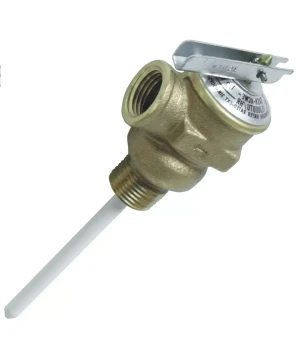 Suburban 525045 P&T Relief Valve, 3/4 in. NPTView part →
 Suburban 161372 Pressure Relief ValveView part →
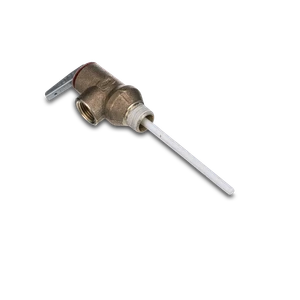 Dometic/Atwood 91604 P/T Relief Valve, 1/2 in. NPTView part →
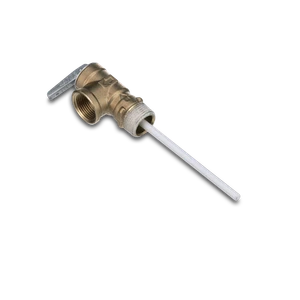 Dometic/Atwood 90028 P/T Relief Valve, 3/4 in. NPTView part →
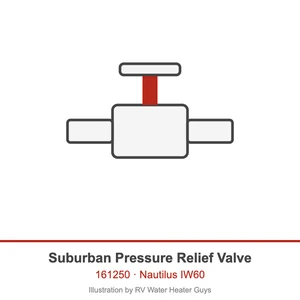 Suburban 161250 IW60 Pressure Relief ValveView part →
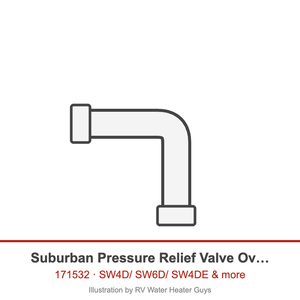 Suburban 171532 Relief Valve Overflow FittingView part →
Shop by category: Suburban parts, Atwood parts.
FAQ
Is it normal for an RV water heater relief valve to drip?
Yes, while heating. Suburban and Dometic both say dripping doesn’t mean the valve is bad. Restore the air pocket and consider an accumulator tank.
How do I stop my RV water heater relief valve from dripping?
Turn off the heater and water, open a hot faucet, pull the relief valve handle until water stops, let it snap shut, then refill.
What pressure is an RV water heater relief valve?
150 psi and 210°F for Suburban and Atwood/Dometic tanks; the Suburban IW60 tankless valve opens at 145 psi.
When should I replace the relief valve?
When it flows steadily, leaks with the heater off and cold, won’t reseat, or is corroded.
Not sure which part fits? Contact us with your model and serial number from the data plate and we’ll confirm it before you order.
From Suburban installation and service manuals and FAQ, Dometic/Atwood installation manuals and the Watts relief valve tag.